
24-hour ECG (Holter)

A small recorder captures your heart rhythm over 24 hours or longer - while you go about your normal day.
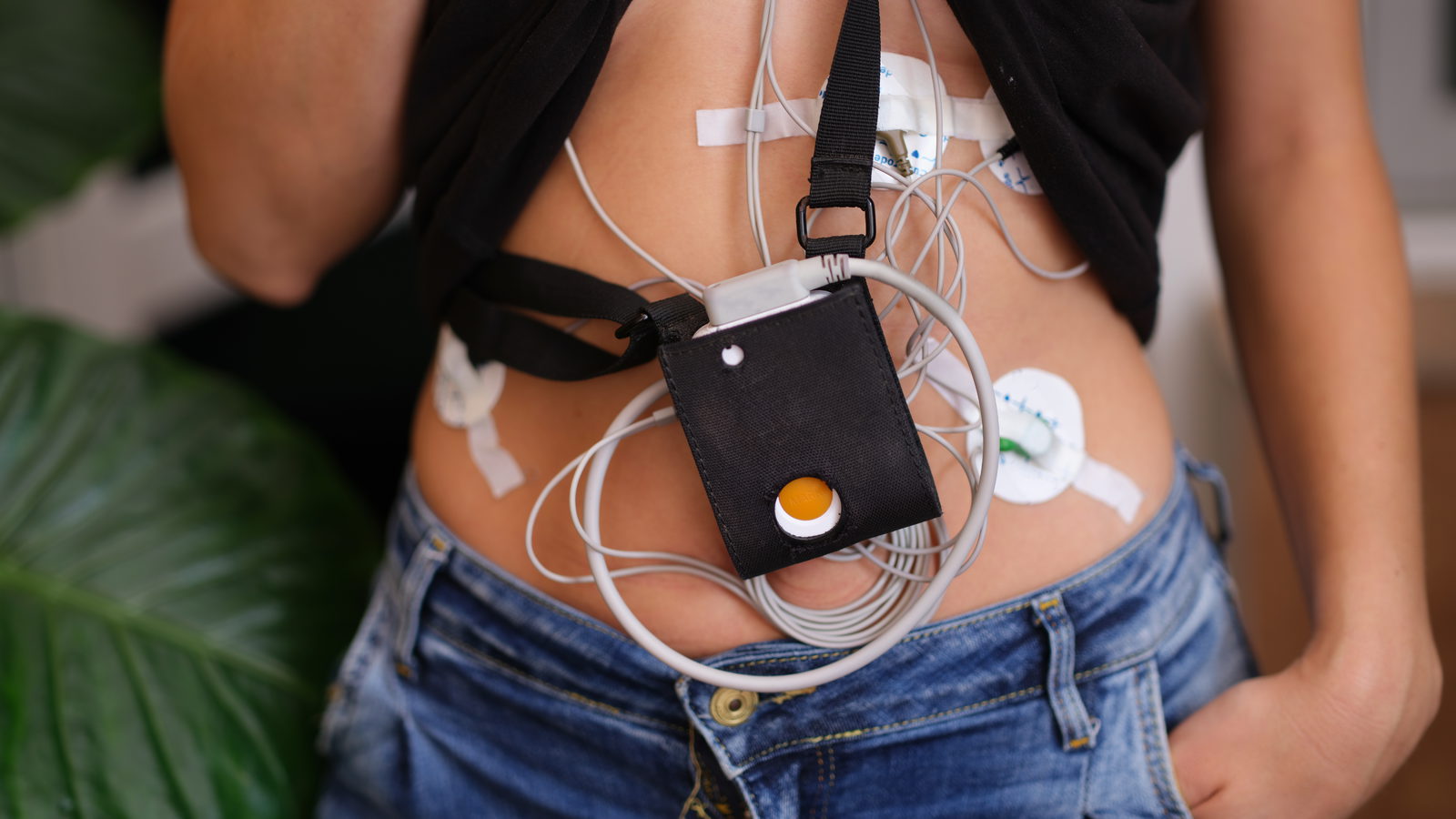
Holter recorder with electrodes on the upper body

Detecting rhythm disorders that come and go

Many heart rhythm disorders do not occur all the time and therefore do not show up on a short resting ECG. The 24-hour ECG, also called a Holter ECG, records every heartbeat over a longer period - at work, while moving and during sleep.

The device is about the size of a smartphone and connected to your chest by electrodes. After the recording, it is read out at the practice and evaluated by the doctor.

When is a 24-hour ECG useful?

  • Palpitations or a racing heart that comes and goes
  • Dizziness or brief fainting without a clear cause
  • Suspected atrial fibrillation
  • Monitoring treatment of rhythm disorders
  • Investigation after a stroke

In case of acute chest pain, shortness of breath or loss of consciousness, call the emergency number 112 immediately.

What happens during a 24-hour ECG

  • 01
    FittingAt the practice, the electrodes are attached and the device is connected.
  • 02
    Daily routineYou carry on with your usual activities.
  • 03
    DiaryYou note when symptoms occur and what you were doing at the time.
  • 04
    EvaluationOnce you return the device, the recording is evaluated and discussed with you.

How to prepare

  • Shower before your appointment - you cannot shower during the recording
  • Avoid body lotion on your chest
  • Wear comfortable clothing
  • Take your medication as usual
  • Keep your diary as accurately as possible

Related services

Your doctor

Book an appointment

Book online via Doctolib or call us during consultation hours.